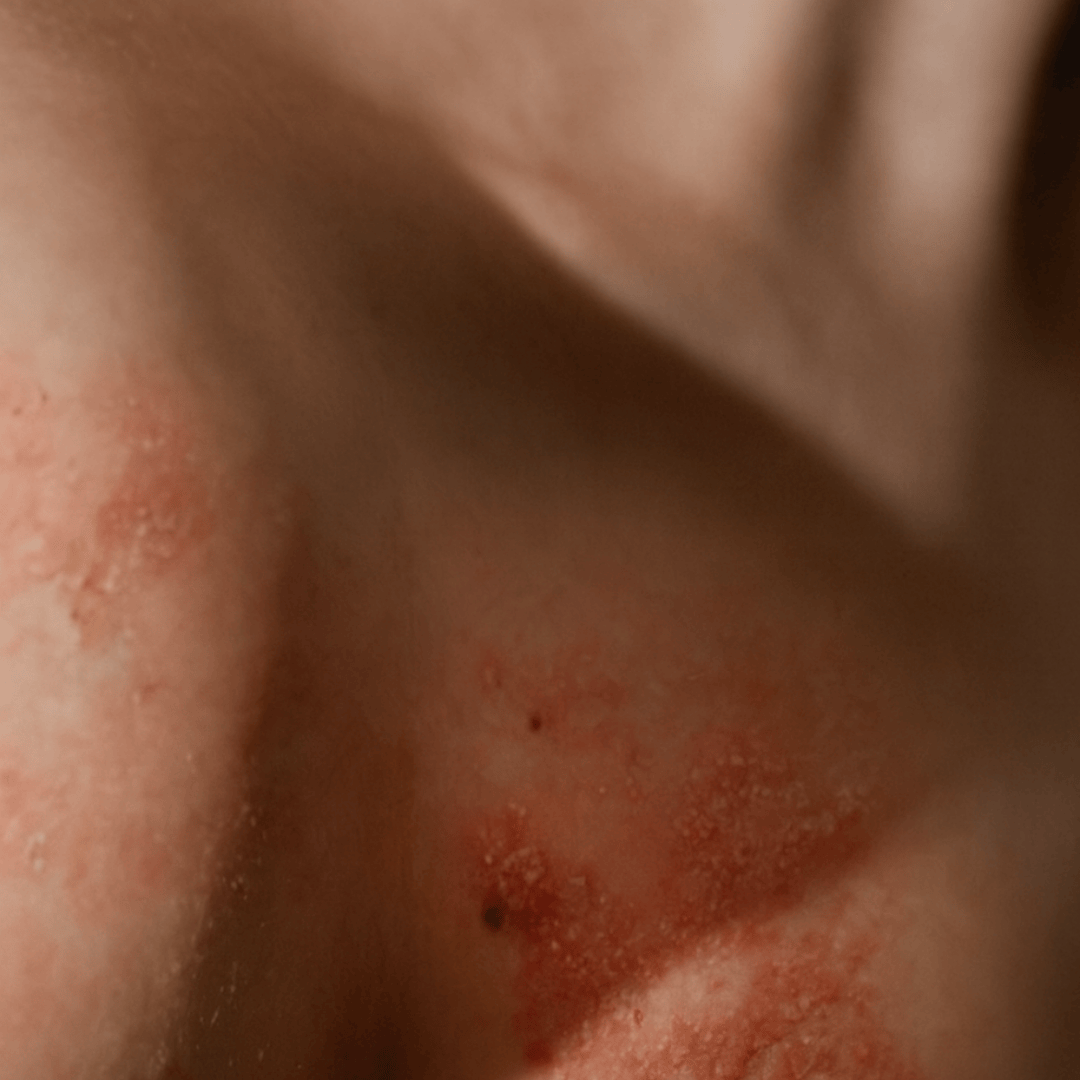
Eczema affects millions of people worldwide, adults and children alike. Redness, itching, dry patches... this inflammatory skin condition raises many questions. One of the most frequent: is eczema contagious? Spoiler alert: no, eczema is not contagious . But old habits die hard. Let's set the record straight.

Eczema: a non-contagious skin condition
Eczema is a chronic inflammatory condition that causes skin lesions: redness, itching, dryness, and sometimes oozing. There are several forms of eczema, the most common being:
-
Atopic eczema (related to an allergic predisposition)
-
Contact eczema (caused by a reaction to an irritant)
-
Chronic hand eczema
-
Dyshidrotic eczema (especially on the hands and feet)
Important: none of these forms of eczema are contagious.
Why is eczema thought to be contagious?
Some misconceptions persist, often due to the visual aspect of the disease. Red patches, scales, scabs, or oozing can provoke rejection or incomprehension.
Here are some common misconceptions :
-
“If it’s on the skin, it’s bound to be contagious.” False. Just because a disease is visible on the skin doesn’t mean it’s contagious. Eczema isn’t caused by a virus or bacteria.
-
“I’ll catch it if I touch someone who has it.” False. You can shake hands, hug, or share objects without any risk.
-
“Eczema is caused by poor hygiene.” Completely false. Eczema has nothing to do with hygiene. On the contrary, overly aggressive treatments can worsen the symptoms.
What actually causes eczema?
The causes of eczema can vary depending on the type, but several factors are frequently involved. Among the most common are:
-
A genetic predisposition
-
An allergic predisposition
-
Stress or strong emotions
-
Contact with certain allergens (perfumes, nickel, cosmetics, household products…)
-
Environmental factors such as pollution, cold, or humidity
More and more people are turning to natural eczema treatments to soothe their skin without irritating it. To learn more about the causes and natural solutions, read our full article: Understanding the Causes of Eczema to Better Soothe It
How to live with eczema without stigmatization?
Even though eczema is not contagious, people who suffer from it can face discrimination or rejection . Informing and raising public awareness is essential to prevent hasty judgments.
Some simple tips:
-
Do not distance yourself from a person with eczema: you are not at risk .
-
If you are affected, talk about it with those around you: education breaks down prejudices .
-
Consult a dermatologist for an accurate diagnosis and appropriate treatment .

And to support your skin on a daily basis, consider gentle and natural formulas.
OUR Baume des Dieux, an effective and soothing natural treatment with organic cocoa butter, is specially formulated for sensitive skin prone to eczema: it soothes, nourishes and protects intensely without harsh ingredients.
Conclusion: Eczema, a visible but non-contagious disease
Eczema can be visually striking, but it is not transmitted through contact or the air . It is therefore essential to combat misconceptions to prevent the isolation of those affected. In short: inform, don't stigmatize.